How the British Women’s Temperance Association was founded – encouraged by a visiting American, Eliza Stewart

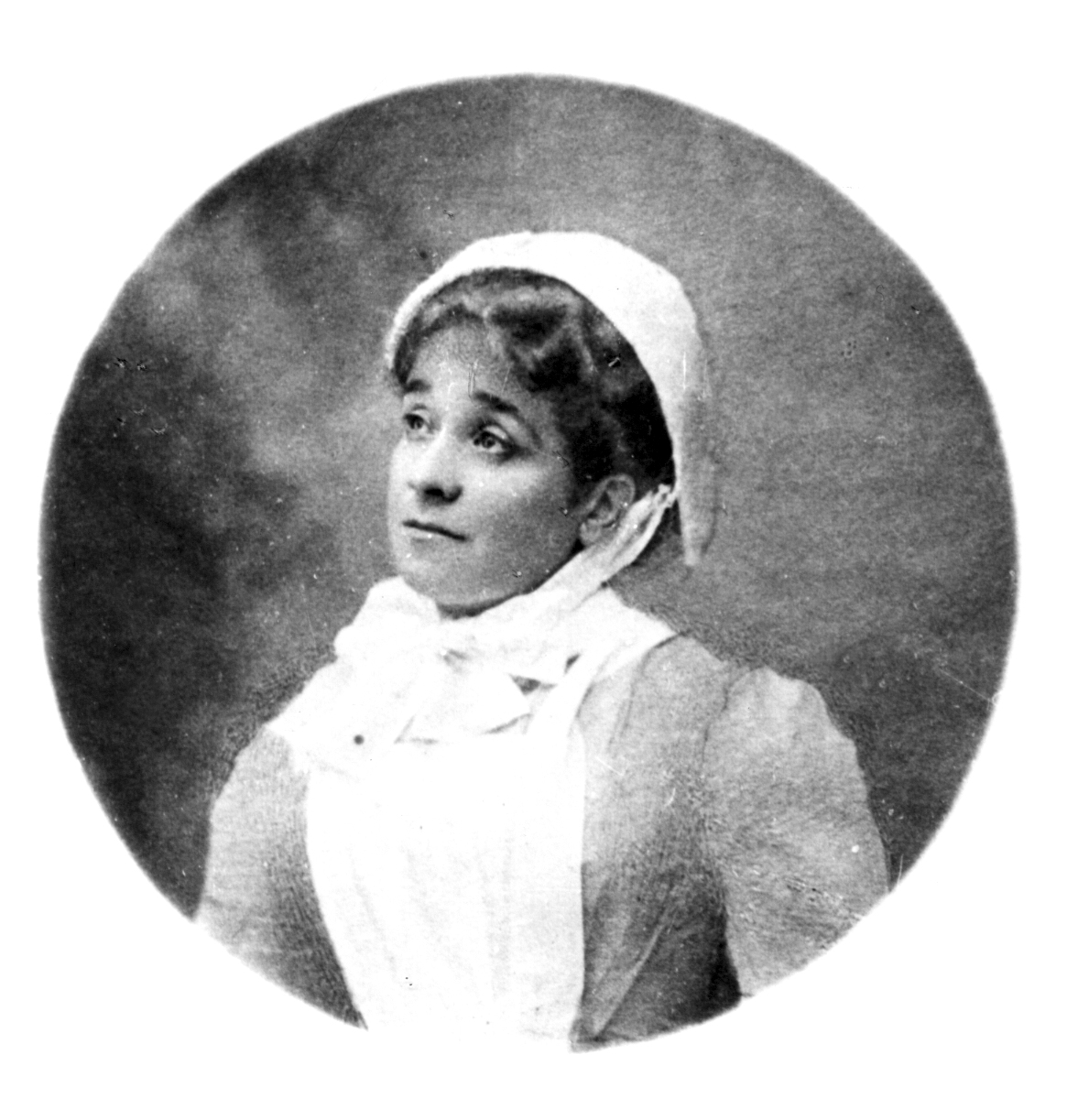
Eliza Stewart, or “Mother Stewart” as she liked to be known, was another lady with a talent for humanity. She had worked tirelessly during the American Civil War as a nurse, setting up hospitals and ensuring adequate supplies of food, blankets and medicine were provided for the wounded.

After the end of the Civil War, she became actively involved in the growing temperance movement in the States. “No power on earth … has such influence to terrorize and make cowards of men as the liquor power. Satan could not have fallen on a more potent instrument with which to thrall the world,” she declared.

Eliza was well known for her participation in what became termed “The Crusades” in 1893 and 1894. This movement started in Ohio, where groups of women were encouraged to march on local saloons, pray and ask the saloonkeeper to stop selling spirits. Amazingly, in many instances they were successful.

She had also had the novel distinction of being allowed to deliver a plea to the jury in an historic court case in 1872 where the wife of a drunkard was bringing a prosecution against the saloonkeeper who had sold liquor to her husband. The prosecution was under a little known law, the Adair law. This allowed a wife, child, parent or guardian or employer of an intoxicated person who had suffered because of that person’s intoxication, to sue the person who had sold the liquor and thus “caused” the intoxication. This law had been on the stature books since 1854 but the 1872 case was the first to be brought under it. Eliza Stewart, in her address to the jury, emphasised the harm the wife had suffered because of her husband’s drinking – being forced to work as a labourer to support her family and suffereing the stigma of being called a drunkard’s wife. She pleaded with the jurymen to deal with the plaintiff as they would like others to deal with their own wives and families. She won the first of many victories for wives under the legislation, causing a sensation locally and nationally.

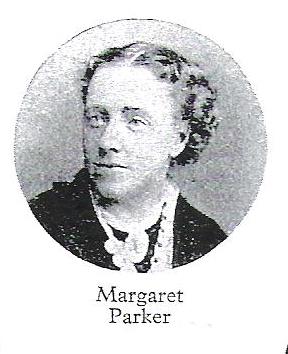
Mother Stewart was therefore well regarded when she came on a speaking tour to Britain in 1876. On April 21st, 1876, she spoke at a meeting in Newcastle upon Tyne which had been convened by Margaret Parker and Margaret Bright Lucas. Margaret Parker had visited America and witnessed for herself the amazing work of the Temperance Crusades there.This meeting aimed to attract women from all round Britain and Ireland who were appalled by the misery and poverty caused by intemperance. The result was the formation of the British Womens’ Temperance Association (BWTA), with the aim of campaigning against the manufacture and sale of alcoholic liquor.
The BWTA’s constitution began:

“In the spirit of Christ, and in the love of God and of humanity, we women of this nation, conscious of the great evils, and appalled by the dangers of intemperance, band ourselves together for the promotion of Total Abstinence, and the entire extinction of the Liquor Traffic.” 

Quite an ambitious objective and certainly extraordinary for movement run by women who did not even have the right to vote!

Posted in A Talent for Humanity, alcohol abuse, Temperance | Tagged , , , , , , , , | Leave a comment

Talks in 2012

I enjoy giving talks about Lady Henry Somerset and her work, so if you belong to a group which is looking for speakers, please get in touch.

Some forthcoming talks include:

Saturday 25th February 2.30pm at Reigate Priory Museum Society, Reigate Priory, Bell Street, Reigate, Surrey RH2 7RL Non-members welcome. Entry just £2 on the door.

Friday 13th April 2pm at Reigate & Redhill U3A

On Thursday 19th April I am one of the speakers at a study day at Eastnor Castle, near Ledbury. The day is organised by the Herefordshire Victoria County History Trust, by kind permission of James Hervey-Bathurst.

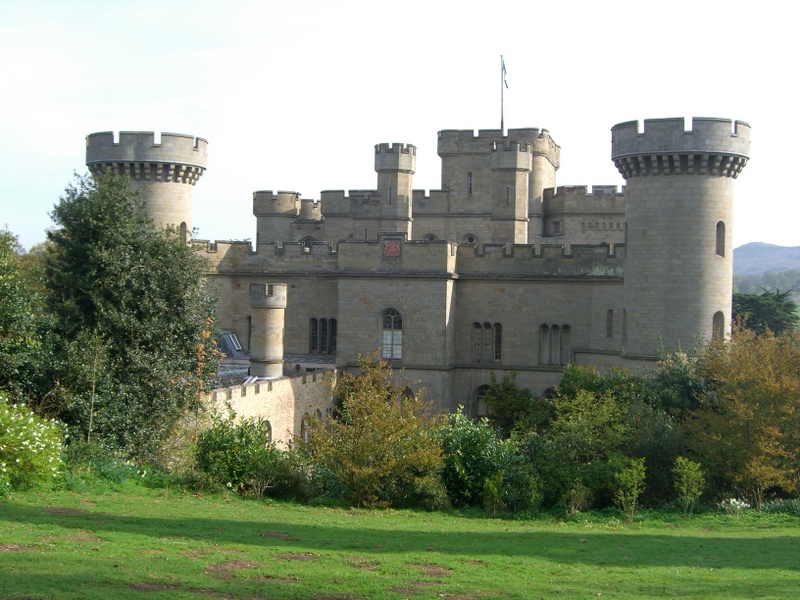
Eastnor Castle, home of Lady henry Somerset for many years

Tickets for the day can be obtained from David Whitehead david.whitehead.hafod@care4free.net cost £25 to include coffee and a light lunch.

Programme

9.15 – 9.30 a.m.        Arrival (Park cars in the Castle courtyard)

9.30 -9.35 a.m.          Welcome by James Hervey-Bathurst

9.35 – 10.20                Janet Cooper, ‘Eastnor before the Castle’

10.20 – 11.05             Sylvia Pinches, ‘Working the Land: Eastnor Farms and Farmsteads’

11.05 – 11.30             Coffee

11.30 – 12.15             David Lovelace, ‘Parkland and Woods of the Eastnor Estate’

12.15 – 1.00 p.m.      Robin Whittaker, ‘Worcestershire History in the Eastnor Archive: A

                                     Listing Project’          

1.00 – 1.45                Lunch             

1.45 – 2.30                 David Whitehead, ‘Grandeur without Arrogance: the Building of                                                                                                        Eastnor Castle 1812-24’                           

2.30 – 3.15                 Ruth Butler, ‘George Frederick Watts (1817-1904) and the Eastnor                                                                                                 Connexion’

3.15 – 4.00                 Ros Black, ‘Lady Henry Somerset: a Woman ahead of her Time’

This promises to be a fascinating day and an excellent chance to learn more about Eastnor village and castle as well as the work of the Victoria County History project.

Tuesday 7th July Dorking Local History group 7.30 at Friends Meeting House, Dorking. Non-members welcome. This talk will focus on the lost village of Duxhurst.

Posted in Duxhurst, Duxhurst - Surrey's Lost Village, Eastnor castle, G.F. Watts, Lady Henry Somerset, Reigate Local History, Reigate Priory, Reigate priory Museum, Surrey Local History, talks and book signings | Tagged , , , , , , | 4 Comments

FOLLOWING IN THE FOOTSTEPS OF LADY HENRY SOMERSET AND FRANCES WILLARD, FRIENDS ACROSS THE OCEAN

Mary McWilliams from the Frances Willard Historical Society visits Reigate

One of the most rewarding aspects of researching the life and work of Lady Henry Somerset has been making contact with academics and researchers on the other side of the world.

This summer it has been my great pleasure to meet Janet Olsen and Mary McWilliams, from Illinois, who are involved with the Frances Willard Historical Association and the Museum at Evanston, where Frances Willard used to live.

I was delighted when Janet Olsen contacted me to say she would be in England and would like to visit Reigate. It was Janet who had first repsonded to my requests for information as to what letters and memorabilia they held at the Frances Willard Museum which related to Lady Henry Somerset. Much like Reigate Priory Museum, the Frances Willard Museum is run by volunteers who do not have the time or financial resources to do justice to the archives they hold, so not all the documents and letters there have yet been fully catalogued. One day I hope to go there myself and look through some of the collection.

I was able to take Janet on a tour of Reigate and also of Duxhurst. We also spent time in Reigate Priory, where Eileen Wood, curator of the Priory Museum, was able to tell Janet the facsinating history of the building. Janet was particularly impressed with its size – she hadn’t realised it would be so large.

A couple of months later, her friend and colleague Mary McWilliams also made the trip to England and she too came to meet me in Reigate, where we did a similar tour.

We have been able to exchange books and photographs. I was particularly thrilled when Janet gave me a book Let Something Good Be Said – Speeches and Writings of Frances E Willard edited by Carolyn de Swarte Gifford and Amy R Slagell, which had been specially signed for me by Carolyn. It had been Carolyn’s book Writing Out My Heart – Selections from the Journal of Frances Willard which had so impressed and enlightened me about Lady Henry’s American friend.

Lady Henry Somerset (Isabel) formed a close bond with Frances Willard, the American temperance leader and between 1891 and 1896 the two women spent many months together, with Frances often staying in England as the guest of Isabel, sometimes at Reigate Priory, sometimes at Eastnor Castle. In 1893 Frances was in England and became too ill to travel back to the States (she had pernicious anemia amnongst other health problems) so it was Isabel who went to America to address the big conventions. She delivered the speeches which the two women had worked on together for the National Woman’s Christian Temperance Union and the 2nd World’s Woman’s Christian Temperance Union convention.

Sadly, when Frances died in February 1898, the two women had not seen each other for over a year, as Frances had been too ill to travel overseas and Isabel had been heavily committed to her work in England.

The World Women’s Christian Temperance Union still exists today. It was the first worldwide organisation for women and has done much to promote temperance and women’s issues around the world.

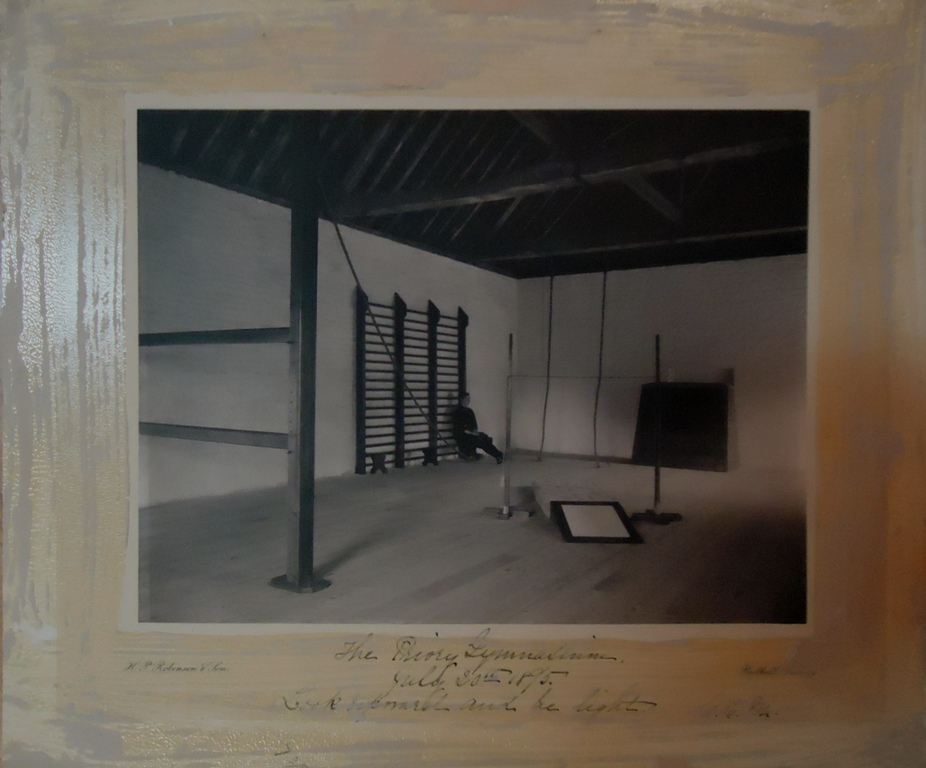
This gymnasium at Reigate Priory was specially built by Lady Henry Somerset for the benefit of Frances Willard Photograph courtesy of the Frances Willard Museum, Evanston. 

Posted in Duxhurst, Feminism, Lady Henry, Lady Henry Somerset, Reigate Local History, Reigate Priory, Temperance, Victorian Do-Gooders, World Woman's Christian Temperance Union | Tagged , , , , , , , , , , , | Leave a comment

Violet’s story

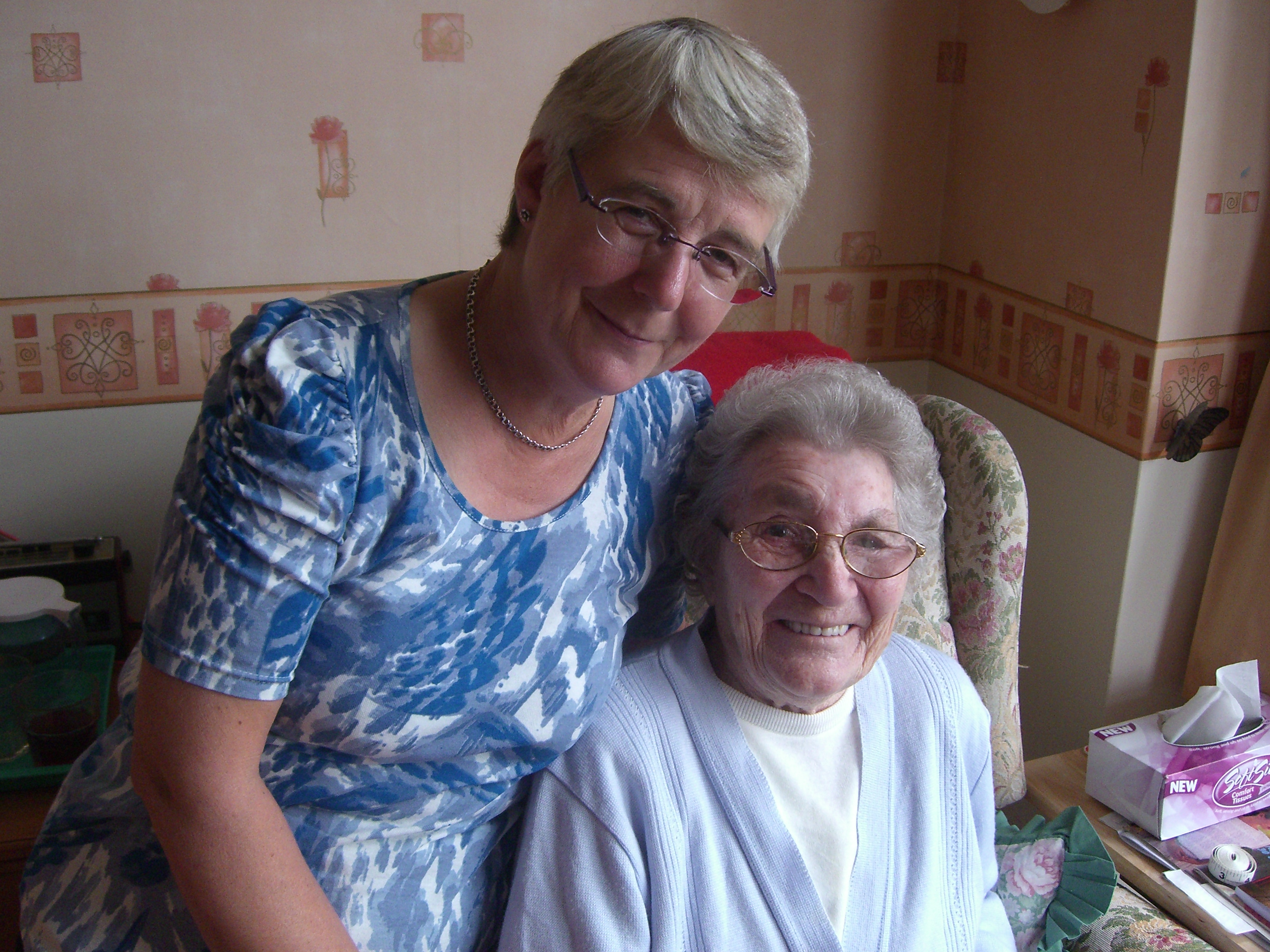
the author with Violet Anthony, age 95

One of the most wonderful characters in the Duxhurst story (and it has a few)  is Violet Anthony.

Violet arrived at Duxhurst just seven months old, early in 1917, at a time when many babies, orphaned or illigitimate, were being cared for there.

She is perhaps the only person alive today who can recall meeting Lady Henry Somerset – who seemed to charm all the children by her presence and who did not stand on ceremony with them. 

Violet spent her childhood at Duxhurst before being sent out into service in London but when the Second World War broke out, she contacted Miss Cass, succesor to Lady Henry Somerset at Duxhurst. She asked if there was anywhere on the estate where she might come and live with her two young children, away from the bombing of London, whilst her husband was away at war.

Her luck was in – Miss Cass suggested she might return to Duxhurst to stay with Frank Wood, her chauffeur, who had been recently widowed. He had spare rooms in his cottage, which would otherwise be likely to be requisitioned by the authorities. Effectively, Violet evacuated herself and her young family, back to the safe haven that Duxhurst had always been to her.

She did not finally leave the area until 1987, thus bringing to an end 70 years’ association with Duxhurst. She has so many happy memories of her times there.

I was thrilled that Violet and her son were happy to share their story with me and to allow me to use it in my book Duxhurst – Surrey’s Lost Village. As I say in the book, “were the Duxhurst project still in existance today, this lovely lady would be its best advertisement.”

Earlier this year, Violet had a fall and broke her hip but with the fighting spirit which has characterised her whole life, she has made a good recovery and is now mobile again. She has just celebrated her 95th birthday and I was thrilled to see her last week in such good form. 


Leave a comment

Lady Henry Somerset and Frances Willard and their relief work during the Armenian crisis of the 1890s

Lady Henry Somerset (standing) and Frances Willard

Lady Henry Somerset and Frances Willard, the American temperance leader, had much in common – including a poor taste in hats, it would seem from this old photograph.

The 2 women did not reserve their campaigning efforts just to the temperance cause. They were pioneers in many women’s issues and shared a deep concern for their fellow human beings, of whatever nationality.

It is perhaps not too surprising then that, whilst enjoying a cycling holiday together in France, Lady Henry Somerset and Frances Willard interupted their journey to spearhead relief efforts for refugees fleeing Armenia, following an invasion by the Turks. 

The Armenian crisis was to flare up many times over the next twenty five years. The Armenians were seen as an ancient Christian race, the Turks as the Infidel. Frances Willard called them “the Apaches of the East”.

The two women travelled to Marseille where they co-ordinated relief efforts, taking over an unused hospital ward in an abandoned monastery. The place provided a temporary shelter for about 300 refugees. Many were then encouraged and helped to emigrate to America, source of much of the funds the women raised. $1000 was sent by J D Rockefeller personally.

A small group of refugees came to England, where they stayed for a while at Lady Henry Somerset’s home, Reigate Priory. I have not been able to trace where they went from there, so would welcome any information.

Anna Gordon, a close friend of both Frances Willard and Lady Henry Somerset, commented that the women needed a rest from their many “causes” but this episode showed that neither were capable of putting their own rest and relaxation first when there were people desperately in need of help.


Posted in A Talent for Humanity, Feminism, Lady Henry, Lady Henry Somerset, Recreational pursuits, Reigate Local History, Reigate Priory, religion, Victorian Do-Gooders | Tagged , , , , , , , | 3 Comments

Lady Henry Somerset portraits by George Frederick Watts

George Frederick Watts was a critically acclaimed Victorian painter who was extremely well connected.

His portrait of Lady Henry Somerset which appears on the cover of my biography hangs at Eastnor Castle.

book cover showing Watts' portrait of Lady Henry Somerset

There you will also find other family portraits including those of Charles, 3rd Earl Somers and Virginia, Lady Somers. I was kindly given permission to use photographs of these in my book, courtesy of James Hervey-Bathurst (owner of Eastnor Castle) and the Courthauld Institute of Art, which carrried out a photographic survey of the Eastnor Castle Collection.

G.F. Watts was married for a short time to the actress Ellen Terry but after this marriage failed he lived with one of Lady Somers’ sisters, Sarah Princeps and her husband Thoby at Little Holland House in London, a home which became  a great meeting place for artist talent.

Lady Henry Somerset (Isabel) was the eldest daughter of Charles, 3rd Earl Somers and his wife, Virginia. Virginia was 1 of the 7 Pattle sisters who all made their mark in Victorian society. Another Pattle sister was Julia Margaret Cameron, who became a reknown photographer. Watts described Virginia as a great beauty. He was almost certainly a little in love with her himself and was said to be devastated when she married Lord Somers. Ironically it was Watts’ portrait of Virginia, displayed at the Royal Academy’s 1849 exhibition, which first brought her to the attention of her future husband.

There is a wonderful gallery at Compton in Surrey, the village to which Watts moved with his second wife, Mary, an accomplished artist, sculptor and potter. This gallery has rcently reopened and houses over 100 paintings by G.F. Watts, including the iconic “Hope”. There are many portriats of the rich and famous of the Victorian era including an unfinished portrait of Florence Nightingale and a beautiful painting of Lillie Langtry which makes her look very demure. There are also portraits of several of Lady Henry Somerset’s cousins including Laura and Rachel Gurney.

Watts Gallery is well worth a visit.

www.wattsgalllery.org.uk

Posted in A Talent for Humanity, G.F. Watts, Lady Henry, Lady Henry Somerset, Out and About, Victorian Do-Gooders | Tagged , , , , , , , , , , , , | Leave a comment

TODAY’S PROBLEMS WITH DRINK AND DRUG ABUSE ARE NOT NEW

With the recent death of Amy Winehouse and the acknowledgement (somewhat belatedly) that liver problems amongst the 20 and 30 year olds are on the increase, we must ask ourselves whether society has really learnt anything over the last 120 years about tackling alcohol and drug abuse.

Lady Henry Somerset

We need to look at the causes of these problems. Some are social – alcohol and drugs can be an easy escape route from the daily grind of life. So we need to look at the problems that people wish to escape. Can treatment ever be effective if the person continues to face their same problems?

We also need to ensure that people have others to whom they can talk – so we should be supporting telephone helplines and counselling services.


Back in the 1890s, Lady Henry Somerset recognised that women in particular were best treated away from their normal environment and that during their rehabilitation they should be assisted to gain the mental strength to resist tempation when they returned to their homes. Meaningful occupation during their rehabiliation was also important. This was the philosophy underpinning her village at Duxhurst.
 
But Lady Henry and her temperance colleagues also recognised the harm done by the vested interests within the liquor trade. Can we honestly say similar interests today do not have a big impact on policy?
 
 To paraphrase Lady Henry and her American colleague Frances Willard, the goverment should make it less easy to do wrong, easier to do right.
 
With alcohol on sale 24/7, should we really be surprised at the problems amongst the younger generations? This has a huge cost, not only to the individual and their families, but to society as a whole – and the taxpayer!
 
Moderation, moderation, moderation! Perhaps this should become society’s new motto, and not just for alcohol consumption.
Posted in Duxhurst, Duxhurst - Surrey's Lost Village, government policy on alcohol, Lady Henry, Lady Henry Somerset, rehabilitation, Reigate Local History, Surrey Local History, Temperance, Victorian Do-Gooders | Tagged , | Leave a comment

Review of A Talent for Humanity and Duxhurst – Surrey’s Lost Village

Received from Suzanne Harrison, Reigate:

“I read Ros Black’s book and was as intrigued as the author about the incredible life of Lady Henry Somerset and the village she created for women with alcohol problems, and disadvantaged children. Her book Duxhurst is even better and gives a real insight into the day to day life of a rehabiliative community, which provides surrogate mothers for vulnerable children also placed in the village for care.

I am awaiting with eager anticipation for a third book.”

Thanks for this Suzanne. Third book currently being planned …

Posted in A Talent for Humanity, Duxhurst, Feminism, Lady Henry, Lady Henry Somerset, Reigate Local History, Surrey Local History, talks and book signings | Tagged , | Leave a comment

Lady Henry Somerset and St Rita, patron of the impossibles

Figure of St Rita from Lady Henry Somerset’s Duxhurst Cottage

Amongst all the religious imagery Lady Henry Somerset had in The Cottage, her home in the Duxhurst village, was a small figure of St Rita – very appropriately the Patron Saint of Impossible Causes.

Did Lady Henry feel a strong affinity with St Rita because her work with inebriate women was often criticised for trying to do the impossible? Many people said that habitual drunkards could not be cured. Lady Henry’s own cousin, Rev E F Russell, initially shared her views but after seeing for himself the work done at Duxhurst, he changed his mind.
 
So who was St Rita? She was born in 1381 in Umbria, Italy. She was devout from an early age and expressed a wish to become a nun but her parents married her, age 12, to a rich local man, Paulo Mancini. Sadly this man abused and insulted her but she stuck with him, showing humility and kindness, and apparently he became a reformed man, but this did not stop his enemies stabbling him to death.
The couple had 2 sons who, as they grew up, vowed to avenge their father’s death. Rita prayed, concerned such action would damn their souls. The sons did not exact “an eye for an eye” but tragically both died soon after from natural causes.
 
 
Following their deaths, Rita entered a nunnery. She prayed to share God’s suffering and was said to have had a thorn from the crucifix embedded in her forehead, causing her great pain. She was canonized in 1900 by Pope Leo XIII.
 
As well as being saint for lost or impossible causes, people pray to St Rita regarding marital problems, motherhood  and abuse.
You can understand why St Rita meant so much to Lady Henry Somerset. They shared many values and many struggles.
 
 
Posted in Anglo-catholicism, Duxhurst, Lady Henry, Lady Henry Somerset, Reigate Local History, religion, Ritualists, Saints, St Rita, Surrey Local History, Temperance | Tagged , , | Leave a comment

Talks and book signings

I really enjoy giving talks to local groups and sharing my enthusiasm for local history and of course the wonderful story of Lady Henry Somerset.

I often pick up new pieces of information from those attending. For instance, when I spoke to Dorking Local History group recently, one of their members, Terry Wooden, told me that he understood some children from the Basque region had stayed at Duxhurst in the late 1930s, having been made homeless in the Spanish Civil War. He later sent me some further research notes from which it seemed the children had been cared for by the Holy Family Homes, an Anglo-Catholic charity which ran Duxhurst village in the 1930s.

Duxhurst auction catalogue 1936

The children were sent temporarily to Park Farm, Wotton, before returning to Duxhurst in 1937. As Holy Family Homes were desperately trying to sell Duxhurst and put the whole estate up for auction in 1936, it would seem they had decided to find alternative accomodation for their charges. But the auction was unsuccessful – no buyers came forward.

On Tuesday September 6th, I shall be doing a Meet the author/book signing at Reigate Priory Park Pavilion between 12 non and 2pm. It would be great to see you.

Then at 6pm on 6th September I shall be back at Priory Park Pavilion to give a talk about Lady Henry Somerset and Duxhurst. Admission is free but due to limited space, you need to reserve your place by emailing Helen West at helen.west@reigate-banstead.gov.uk

I shall be down at Eastnor Castle on Thursday 8th September for a special Heritage Open Day and signing copies of my book in the gift shop, courtesy of the castle’s owner, James hervey-Bathurst, who is the grandson of Lady Henry Somerset’s cousin, Arthur, who inherited the Castle from her faher, the 3rd Earl Somers.

Eastnor Castle, former home of Lady Henry Somerset

Then on Saturday 10th September I am giving a talk at Burgage Hall, in Ledbury (near Eastnor) at 3pm, linked to the country-wide Heritage Weekend.

On 1st December I shall be talking to The Reigate Society about Duxhurst – Surrey’s Lost Village at Reigate Priory. My talk to the Society in December 2010 was cancelled due to some of the heaviest snow Surrey has seen in years. Let’s hope for better luck in 2011. Entry is free and visitors are welcome.

If you are a member of a local group and in need of speakers, please contact me at ros243@sky.com I can tailor my talk to your requirements, timewise and have my own laptop and projector (even a screen if necessary)

I am also happy to talk to writing groups about researching, writing and marketing historical biography and local history books.

Posted in Duxhurst, Feminism, Lady Henry, Lady Henry Somerset, Out and About, Reigate Local History, Reigate Priory, Surrey Local History, talks and book signings, Temperance, Victorian Do-Gooders | Tagged , , , , , , , , , | Leave a comment