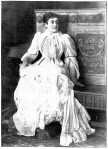
SPECIAL SERVICE AT DUXHURST, CELEBRATING WORK OF LADY HENRY SOMERSET

People gather for the special Duxhurst service

On Sunday 18th June, 2011 local residents and members of Emmanuel Church, Sidlow gathered on the site of the old church of St Mary and the Angels, at Duxhurst, Surrey.

The service was part of Emmanuel Church’s 150th celebrations. The Duxhurst site is within its parish and Emmanuel Church itself has a few of the treasures which were rescued from Duxhurst before the church fell into total ruin.
The service was led by Rev Bill Campen, who read out a list of names of those buried in the small churchyard of St Mary and the Angels, including Gertrude Cass, who had taken over the village after the death of Lady Henry Somerset and struggled desperately to keep it going. She lived in The Cottage, Lady Henry’s former home and died, aged 99, in 1958. Several children, probably residents of the Duxhurst children’s home, are also buried there. Sadly many of the gravestones have been vandalised, for in the 1960s the estate was popular with young people for parties and various nefarious activities. Yet, for this special service, locals had worked to clear some of the scrub and brambles from the graveyard.
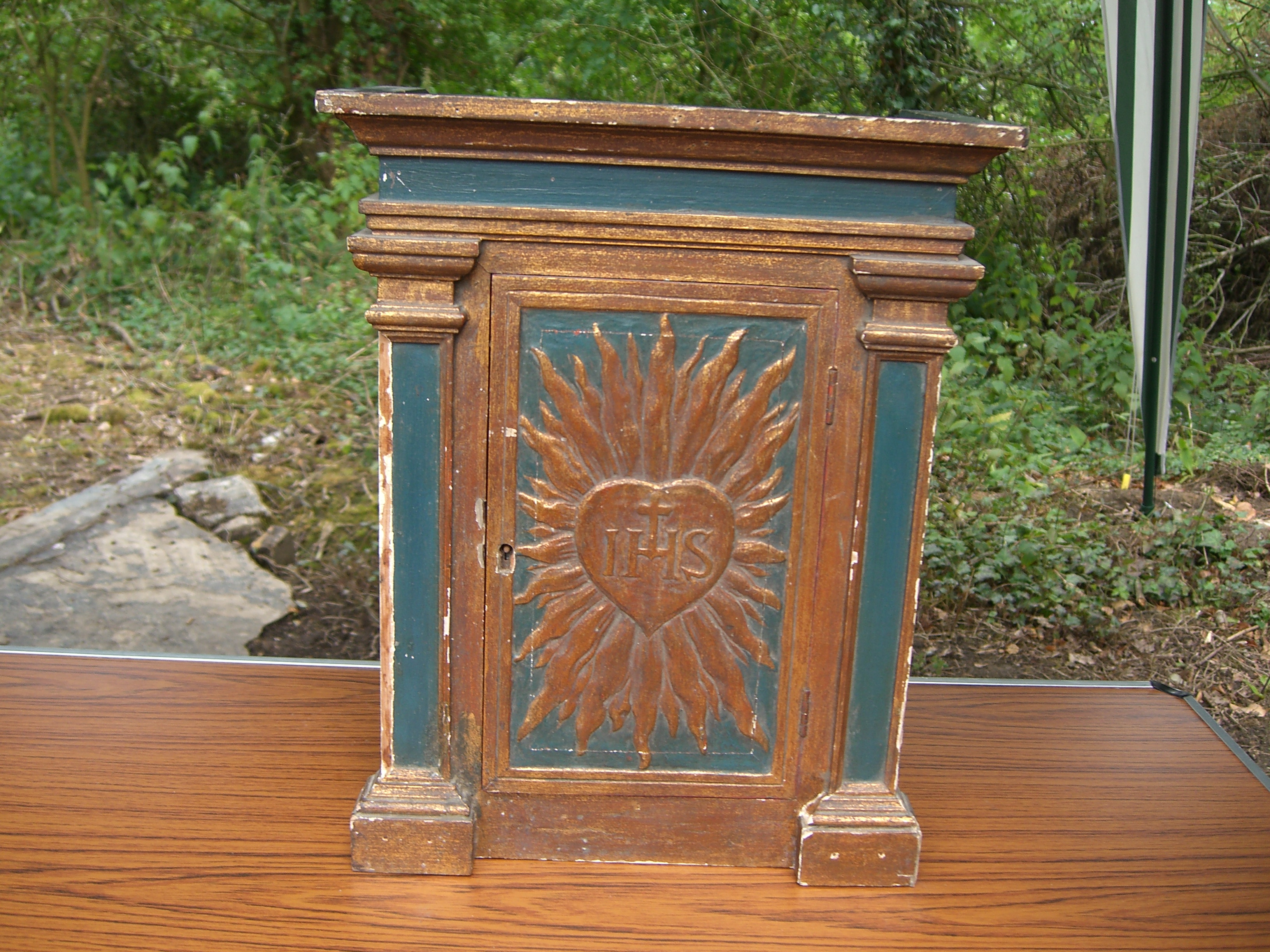
In his short sermon, the Rev Campen talked about the Duxhurst tabernacle which was on display. This was a small cupboard in which the consecrated bread, and possibly wine (at Duxhurst, this was of the non-alcoholic variety), were placed after Holy Communion and then often taken aorund to the sick and housebound. But, as he explained, this particular tabernacle has great symbolic significance as it represents the great changes in the Anglican church in the late 19th/early 20th century and the rise of the Ritualists and Anglo-Catholicism.

The Duxhurst tabernacle

 The tabernacle used to belong to Fr Dolling, who had worked at the mission church of St Agatha’s in Portsmouth. He and Lady Henry Somerset would have known each other through their respective ministries and through St Alban’s Church, in Holborn, with which both were associated. When Fr Dolling was setting up a new parish church in Portsmouth, some of the furnishings of his old church were redundant and Lady Henry was able to obtain them for her new church at Duxhurst. 

It may have been on a simple table, out in the open air, rather than on a side altar in a wonderfully ornate, yet homely church, but it was, nevertheless, rather wonderful to feel the tabernacle had come home.

Posted in Duxhurst, Fr Dolling, Lady Henry, Reigate Local History, religion, Surrey Local History, Temperance, Victorian Do-Gooders | Tagged , , , , , , | 2 Comments

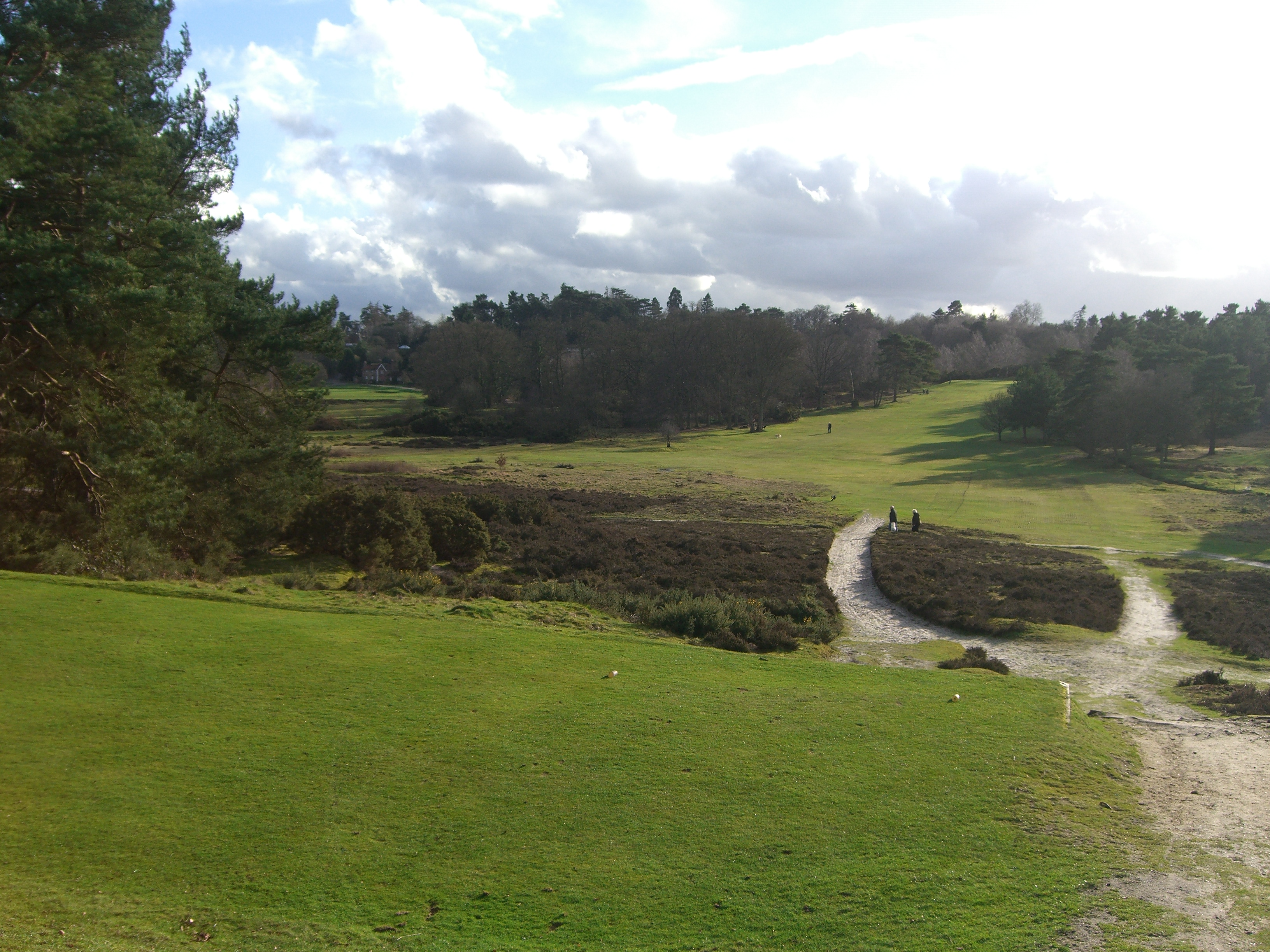
It was a great pleasure on Thursday 7th July to give a talk at Reigate Heath Golf Club as part of the 2011 Reigate Heath Exhibition.

5th tee at reigate Heath Golf Course

It was in 1895 that Lady Henry Somerset was persuaded to grant land at Reigate Heath for a golf course and she became the first president of the club. Lady Henry herself was a keen golfer. She had her own private 9 hole course in the grounds of Reigate Priory, down by the lake, and she employed a young man to keep these links in order. He was later chastised for playing on the Heath course too frequently. Presumably he found the heath links more challenging!

As president of both the golf club and the British Womens’s Temperance Association, Lady Henry insisted that no intoxicating liquor be sold at the club – a very unusual situation. But the club maintained this position until a few months after Lady Henry’s death in 1921, when the committee then decided the 19th hole could be released from its tee total stance!

She also insisted that men and women should be admitted as members on equal terms – so women had no right to vote, but they could play golf – at least in Reigate.

Lady Henry also put up the initial capital for the club house. Then in 1900 she sold this and the nearby mill to the golf club for £2400. The golf club then leased the mill to the church, although in 1962 this was sold to Reigate & Banstead Borough Council.

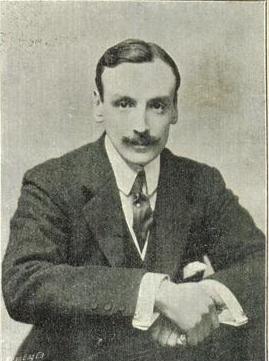
Lady Henry’s son, Somers Somerset and his wife Lady Katherine were also members of the golf club and Somers Somerset took over as president when his mother died. When he passed the manorial rights to the land over to the Reigate Corporation, he ensured the council gave another lease to the golf club, syaing that the golf club was “a nuisance to no-one and a pleasure to many.”

Somers Somerset

Posted on by rosblack | Leave a comment

New Book

Hope you like the cover

I’m thrilled with the cover of my new book – done for me by Steve Ashmore of Agent Design

Publication date mid- July

Posted in Duxhurst, Lady Henry Somerset, Reigate Local History, Surrey Local History | Tagged , , , , , , , , | 2 Comments

Duxhurst – Surrey’s Lost Village

Duxhurst – Surrey’s Lost Village

I have been rather quiet recently on the blog because I have been writing my new book.

I’m delighted to announce that Duxhurst – Surrey’s Lost Village is now with the printers and will be avilable from mid-July.

More details to follow shortly as to how to order your copy.

Posted in Duxhurst, Lady Henry, Reigate Local History, Reigate Priory, Surrey Local History, Temperance | Tagged , , | Leave a comment

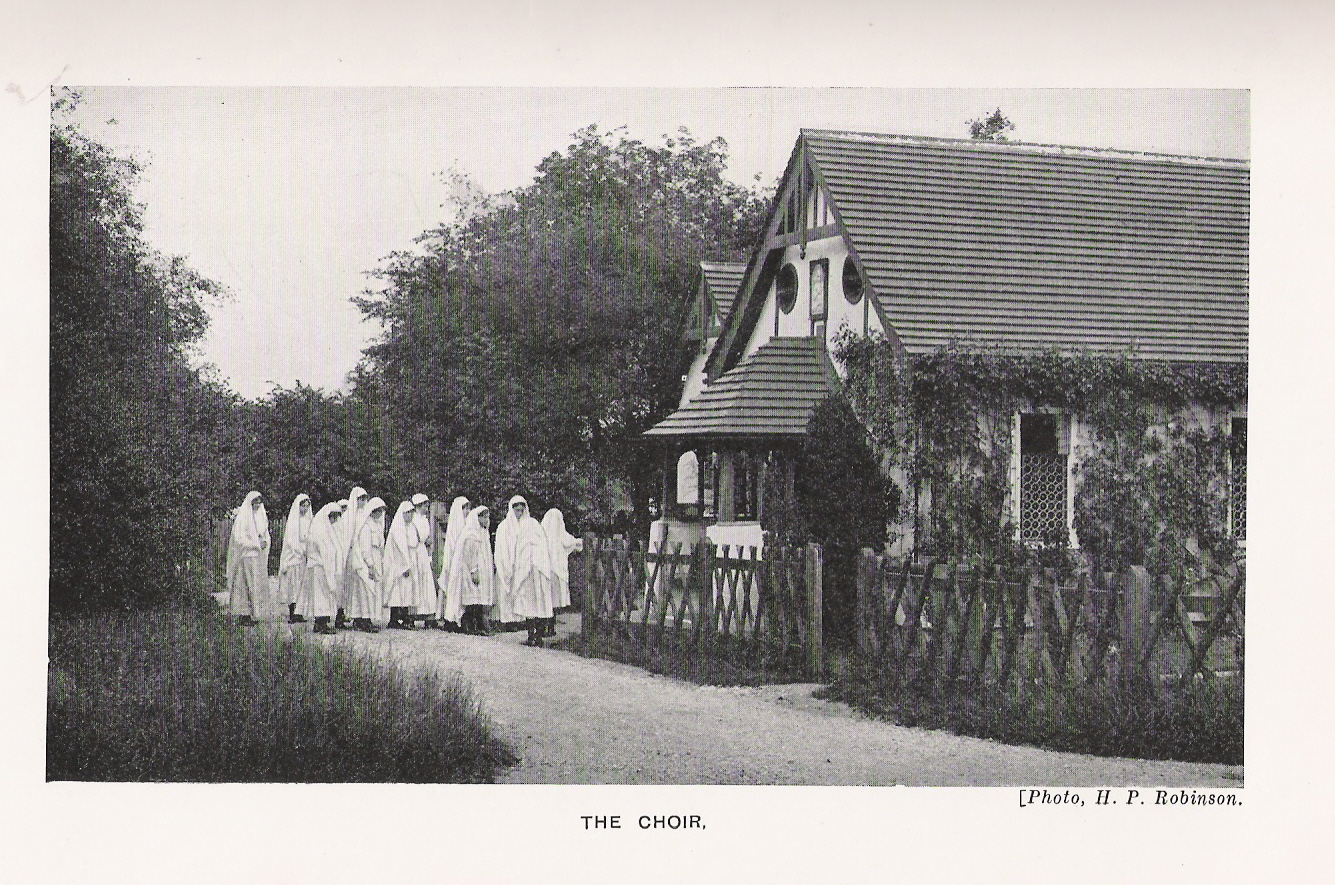
Duxhurst Church

Interior of St Mary and the Angels, Duxhurst

Religion was at the heart of the work carried out by Lady Henry Somerset at Duxhurst, the village she founded in Surrey as a home for women and children affected by alcohol abuse: “the farm colony for inebriate women” as it was gloriously described in Whitaker’s Almanac.

Lady Henry’s faith developed over the years. During her early temperance days, she worked along side Methodist women on the streets of Ledbury, the market town near one of her family homes, Eastnor Castle. But by the time she was in her fifties, she was a devout Anglo-Catholic and she filled not only her home at Duxhurst (The Cottage) but many of the buildings there with religious imagery. Although the village was non-denominational, Lady Henry was proud to assert “We are not afraid of ritual. Rightly understood it is a great help to faith.”

The church she had built in the centre of the village, St Mary and the Angels, was very beautiful. Whilst on the outside it appeared rustic and simple, inside it was very spendid, full of valuable pictures and icons which she had brought back from her travels abroad as well as a splendid organ.

Sadly this wonderful church, which brought peace to the herats of so many people, is no longer standing. Its graveyeard is overgrown and many of the gravestones have been vandalised.

Yet, rather wonderfully, there will be a church service on the Duxhurst site on Sunday 19th June 2011. This special service is being arranged by the congregation of nearby Emmanuel Church at Sidlow, as part of its 150th anniversary celebrations. I am delighted that Duxhurst is being remembered in this way.

The service will be at 3.30pm, followed by a picnic tea. The service is open to all, something which would have pleased Lady Henry herself.

Details of Emmanuel Church’s 150th celebrations can be found on http://www.emmanuelchurchsidlow.co.uk under the special events section.

As part of their special weekend, I shall be giving a talk about Duxhurst at Emmanuel Church on Saturday 18th June.

Posted in Lady Henry, Temperance | Tagged , , , , | 6 Comments

Don’t blame people for drinking when alcohol is cheaper than food

The government’s recent announcement that it will impose minimum prices for beer, wine and spirits is just a small step towards reducing our culture of binge drinking. It probably won’t, of itself, make a huge difference to people’s habits but at least it is some acknowledgement that low prices encourage irresponsible consumption.

Yet none of this is new. The problems today are much as they were in Victorian times, yet we pride ourselves on our progress in tackling social ills.

Lady Henry Somerset argued in the 1890s that people could not be blamed for turning to alcohol to escape the misery of their daily lives when drink was cheaper than nourishing food. This is still true today.

We need to tackle the reasons why people turn to drink. There are almost as many reasons as there are drinkers. Many people have their own demons to fight. To Lady Henry, who was very religious, this meant drinkers turning to God for redemption. The soul needed healing as much as the body. This now sounds very old-fashioned, especially if you are not religiously inclined.

But today’s culture, especially amongst some of the young, is one in which instant gratification is more important than long-term consequences; a devil-may-care attitude prevails. Is it boredom? Is it a feeling of being powerless against the huge machinery of state? Is it simply selfishness?

Until we can get people to understand that all their actions have consequences and to take responsibility for their behaviour, we will not solve today’s alcohol-related social problems. They may not choose to turn to God for help, but surely there is some way they can be helped towards moderation.

At least the government is trying. It’s a small step, but it is at least in the right direction.

Posted in government policy on alcohol, Lady Henry, Temperance | Tagged , , | Leave a comment

New DVD released re Reigate Priory

Although it was quite scary, it was also an honour last summer to be part of the making of a new DVD about Reigate Priory.

Priory Park has recently been subject to a major renovation and improvement scheme, funded by Heritage Lottery Grant, and supported by Reigate & Banstead Borough Council and many local businesses.

The gardens within the park were restored very much according to the designs of Lady Henry Somerset, although some of the extravagant planting of her day has been simplified.

The DVD was produced by Carolyn Burnley of BVP, Burnley Video Productions and can be purchased through her website http://www.reigatehistory.co.uk

There is some superb footage of the renovation works in progress and some wonderful shots of the Priory Park lake and woodland. It just makes you want to go and explore the place again, preferably in the sunshine!

Towards the end of the filming, Carolyn asked me what I thought Lady Henry Somerset’s views would be about the way the Park is used today. As we talked, the sun was shining, mothers pushed prams, toddlers raced around the playground and dog walkers headed for the wooded slopes. The flowerbeds were a riot of colour. The air was filled with the sounds of happy chatter and laughter. I felt very confident saying that Lady Henry would have approved.

Posted in Lady Henry, Reigate Priory | Tagged , , , | Leave a comment

The Mighty Rivers of Intemperance and Improvidence

On New Year’s Day 1889, in Hereford, Lady Henry Somerset was the first woman to be initiated into the Independent Order of the Rechabites.

We have long since lost sight of the Rechabites but in the late 19th century, they were an influential temperance friendly society. Founded in 1835, the Order was named after an Old Testament nomadic tribe of abstainers. Its objectives were the glory of God and the welfare of humanity – a perfect match for Lady Henry’s beliefs.

In her speech, Lady Henry referred to the mighty rivers of intemperance and improvidence, which hindered efforts to stem the great tide of misery flowing through the land. Whilst she agreed that improvidence was largely associated with improvidence, she also stated a great truth when she said:
“There runs through our national character a marvellous want of thrift and an astonishing indifference to the wants of a rainy day.”

How true this still rings today!

Lady Henry Somerset went on to say that this characteristic was not restricted to the working class – it affected all classes of society – again this is still true today.

Perhaps surprisingly for one who was committed herself to total abstinence, she also declared:

“I maintain that no government has the right to make arbitrary laws to enforce sobriety, as that is a system which would only impair the liberty of the nation”.

She was a century ahead of the Human Rights Act!!

“But every good government can make it easy to do right, and difficult to do wrong”.

Perhaps this should become a slogan in the next general election.

Her speech was printed in full by the Hereford Times and then reprinted in booklet form for wider circulation.

It was only a few month’s later that Lady Henry Somerset was elected president of the British Women’s Temperance Association.

She had proved herself a powerful orator and passionate advocate of temperance and moral restraint.

Posted in Lady Henry, Reigate Priory, Temperance, Victorian Do-Gooders | Tagged , , , , , | Leave a comment

Ready for tide to turn on our attitude to Do-Gooders?

Summing up his excellent series on Victorian Do-Gooders, Ian Hislop commented that “their achievements have been underrated, their absurdities accentuated” but posed the question “Are we ready for the tide to turn?”

In researching my book, I came across many other stories of fascinating do-gooders, who had each worked tirelessly to make a difference to the lives of those less-fortunate. One or two were familiar names but most remain just footnotes in history, seen as not relevant in today’s world. Lady Henry Somerset and her fellow temperance campaigners fell into this category.

I hope this programme will make people more aware of their stories. I hope it will also make people think what they themselves could do, even if only in a small way, to make life better for others.

Posted in Lady Henry, Temperance, Victorian Do-Gooders | Tagged , , | Leave a comment

Meet the pragmatic temperance leader

Photo courtesy of Sean Hawkins


Lady Henry Somerset’s tenure as President of the British Women’s Temperance Association and Vice-President/President of the World Woman’s Christian temperance Union was frequently mired in controversy.
One of the main reasons for this was that she was a pragmatist. She did not believe it was right for the law to ban people from drinking. Indeed she told the Royal Commission on Liquor Licensing in 1897 that it would be against people’s civil liberties if they were banned from drinking.
“I should not wish to interfere with anybody who chose to take alcohol in moderate quantities”.
She wanted it to be harder for people who were abusing alcohol to be tempted, so she wanted fewer pubs. In her evidence to the Commission she presented maps of different parts of London, showing how the poorer areas had a higher concentration of pubs. No wonder people were tempted, especially when drink was often cheaper than food.
She chose to take the Total Abstinence Pledge herself because she belived in leading by example. She knew that moderation was not a cure for an alcoholic – such people had to refrain from drinking in order to recover their physical and mental strength. How could she expect others to make this sacrifice, if she didn’t make a similar sacrifice herself? And of course she encouraged all her servants, tenants and friends to do the same. But on occasions she would tell guests to her home at Eastnor Castle to bring their own drink, if they wanted it, and she served wine to her Royal guests at Reigate priory when Mary, Duchess of Teck came to officially open Duxhurst, her village for the care of inebriate women.
Many of her colleagues in the temperance movement favoured the American approach, arguing for prohibition. Lady Henry chose to tackle the causes of alcoholism and drug abuse and help those, particularly women, who had fallen prey to such temptations. It meant she got involved in many other social causes and some of the women on the Executive Council of the BWTA did not like this. Inevitably there was a split in the ranks and a new group, the Women’s Total Abstinence Union was formed, to concentrate solely on the temperance issue. The BWTA became the National British Women’s Temperance Association and remained under Lady Henry’s leadership for several more years. This enabled her to widen the remit of the Association, because she recognised that many of the social ills of the time were interlinked.
It was this pragmatism which made Lady Henry’s work so meaningful and successful.

Posted in Lady Henry, Reigate Priory, Temperance | Tagged , , , , , , , | Leave a comment